

SPONSORS:



The Small Grants Fund
The Small Grants Fund for Sustainable Fisheries and MPAs, and Alternative Livelihoods
2013
Reforzamiento de la Vigilancia y Seguridad en el Parque Nacional Submarino La Caleta
 El Parque Nacional Submarino La Caleta es un sitio de implementación de varios programas exitosos de manejo de áreas marinas protegidas que sirve de modelo a personas interesadas de diferentes zonas del país y la región, para comprender los beneficios de la protección marina, mediante la integración de la comunidad, tanto en el manejo, como en la recepción de beneficios económicos. Su modelo de gestión ha mostrado evidencias claras de que la vigilancia, la auto-regulación, la instalación de boyas de amarre, las prácticas de pesca sostenible y actividades alternativas de generación de ingresos (ecoturismo), pueden ser muy beneficiosas para el bienestar de los arrecifes de coral y las comunidades locales. Sin embargo, este éxito inicial observado se puede ver en peligro si la sostenibilidad financiera no se logra en un futuro cercano y en el largo plazo y,si no se refuerzan las medidas de cumplimiento.
La Caleta puede un modelo eficaz de que una área marina protegida puedeser auto sostenible si el impulso actual se mantiene. RCDR y sus socios están trabajando para mantener un alto nivel conservación basado en el monitoreo de los recursos naturales y la aplicación de los resultados de la gestión, identificando y reduciendo las amenazas, y preparando las comunidades locales con alternativas de subsistencia, así como en el fortalecimiento de la restauración natural evidenciada hasta ahora.
RCDR implementó un proyecto que culminó con la realización de un Taller sobre Regulaciones y Código de Conducta en el Parque Nacional Submarino La Caleta para Autoridades y Usuarios, gracias al Programa Ambiental de las Naciones Unidas y su programa del Caribe (PNUMA-PAC), el Centro Regional del Protocolo SPAW, y la Red de Administradores de Áreas Marinas Protegidas (CAMPAM), con financiamiento de la Dirección General de Cooperación para el Desarrollo del Ministerio de Relaciones Exteriores del Gobierno de Italia para apoyar el proyecto regional "Reto del Caribe", y fondos propios de Reef Check República Dominicana.
Objetivos del taller:
- Reforzar el cumplimiento de las regulaciones existentes
- Mejorar las medidas de cumplimiento mediante un aumento de la capacidad de las autoridades locales y los líderes de la comunidad
- Aumentar el actual patrullaje terrestre y marino realizado por el Servicio Nacional de Protección Ambiental (SENPA) y de los guardaparques y adaptar nuevas normativas para la mejor conservación del Parque Nacional Submarino La Caleta
Para mayor información comuníquese con , Presiente, Reef Check Republica Dominicana (www.reefcheck.org)
2012
Antigua Barbuda-Dutch Antilles Marine Protected Area Learning Exchange
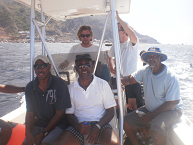 Antigua and Barbuda has several declared Marine Protected Areas; however most do not have on site management systems in place to allow for effective control of MPA objectives. Only a single site on Barbuda has been staffed with permanent on-site management. The learning exchange offered the opportunity from Antigua and Barbuda to learn about effective MPA management by observing management protocols in the Dutch Antilles territories of St. Eustatius and Saba. The team also participated in the Dutch Antilles MPA Managers Meeting in an effort to observe coordinating efforts across various MPAs. The following objectives were predefined:
- Improving knowledge of efficient management tools applied to the Dutch Caribbean MPA such as enforcement and community involvement
- To gain an understanding of the collaborative arrangement that exists among the Dutch Caribbean islands marine parks, and explore opportunities for collaboration with the closer ones (Saba and Statia MP) towards informing the framework under consideration for Antigua and Barbuda's MPAs
- To share expertise in MPA monitoring techniques to assist effective conservation of key species and habitats
The following outputs were achieved:
- Four persons from Antigua and Barbuda were exposed to range of effective MPA management operations in the Dutch Antilles
- Gained understanding of various research programmes and monitoring protocols implemented on the ground in the Dutch Antilles.
- Exposed to protected areas which are sustainably financed
The Dutch Antilles was an excellent setting for this exchange as they are so far along in terms of the management of the marine protected area system. Their procedures for collaboration and cooperation across protected area managers is also a major plus since Antigua and Barbuda is now moving towards finding an avenue for connecting Fisheries administered protected areas through as system approach.
The experience was invaluable and an excellent opportunity to see a protected area management system that, while not perfect, is very efficiently managed. The meetings sessions regarding trust funds and financial sustainability are extremely useful as Antigua and Barbuda moves to setting up a self-sustaining system of protected areas.
The learning exchange offered the opportunity to the newly appointed NEMMA manager who will in the coming months work towards creating a self-sustaining and well managed MPA for Antigua and Barbuda to see firsthand the various aspects of work that would be required for making this possible in the Antiguan context.
The project was implemented by the Fisheries Division, Ministry of Agriculture, Lands, Housing and Environment with the contribution of St. Eustatius, and Saba marina parks, with a small grant from UNEP-CEP with funding from the Directorate General for Development Cooperation of the Italian Ministry of Foreign Affairs for project "Regional support for the Caribbean Challenge initiative: Networking, consolidation and regional coordination of MPA management" and the contribution of the GCFI.
Exchange visit of fishermen and MPA staff of the Soufriere Marine Management Area to Puerto Morelos National Park, Mexico
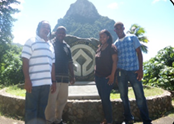 One young fisherman and two staff from the Soufriere Marine Management Area (SMMA) travelled to Puerto Morelos, Mexico from 28th October to 6th November 2011 to participate in a Learning Exchange with fishermen from Mexico and Nevis. The primary objective of the Exchange was to increase the understanding of St. Lucian fishers about MPAs in the wider Caribbean by providing an opportunity to learn and share experiences with regional counterparts. The implementation of the Learning Exchange during the 64th Gulf and Caribbean Fisheries Institute Annual Conference afforded the participants the opportunity to network with fishermen from the wider Caribbean Region. The learning exchange is part of the project "Regional support for the Caribbean Challenge initiative: Networking, consolidation and regional coordination of MPA management", supported by UNEP-CEP through CaMPAM and GCFI, with funding from the Directorate General for Development Cooperation of the Italian Ministry of Foreign Affairs.
During a tour of the Puerto Morelos National Park (PMNP) the group got the opportunity to snorkel on the Mesoamerican Reef, the world's second longest barrier reef. The group from St. Lucia was then able to compare the health of that reef and fish abundance to that of the reefs in our Marine Reserves in the SMMA. Lettuce and elkhorn coral formations were abundant in PMNP and the SMMA typically has a greater abundance of sponges, young coral colonies and long-spined sea urchins (Diadema antillarum).
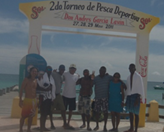 The leader of the snorkel tour was the President of the tourism cooperative in Puerto Morelos. Mr. Adame Sutter explained that the fishermen from Puerto Morelos typically own two boats, one is used for fishing and the other is used to conduct snorkeling tours to the barrier reef. He explained how the PMNP provided assistance and training for the fishermen to enter the tourism business to gain income from the park since they could no longer fish in that area. The fishermen from Puerto Morelos encouraged the young fisher from St. Lucia to give the MPA his full support and to encourage his peers to do the same. The fishers from Nevis were also encouraged by the Mexican and St. Lucian representatives to support the initiative to establish an MPA in their country. During the exchange visit, the fishermen from Nevis were able to provide advice to the young fisher on fishing gear and encouraged him to start surface longline fishing.
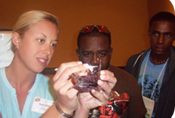 The St. Lucian group also participated in a two-day workshop on the Management and Control of the Lionfish during GCFI. The timing of the workshop was ideal as St. Lucia recorded the first confirmed lionfish sighting on 19th October 2011. Upon returning to St. Lucia, a workshop was held on 7th December 2011 where the group presented on the lessons learned during the exchange to approximately 35 fishers and residents and one nurse from Soufriere. The exchange has already started benefiting the SMMA as during the presentation young fisher impressed on his peers the need for the older fishermen to set good examples for the younger ones. Additionally, the first presentation ever delivered on the lionfish to fishermen in St. Lucia was done then, by the participants of this learning exchange.
Exchange between St. Eustatius National Parks Foundation and St. Kitts and Nevis marine resources stakeholders on lionfish management
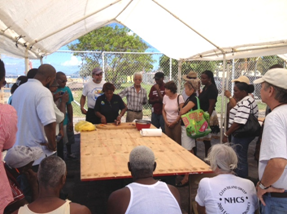 In the first week of November the St Eustatius National Parks foundation (STENAPA) hosted a successful lionfish management workshop on the neighboring island of Nevis. The workshop focused on awareness, management and handling of the invasive lionfish.
Like other Caribbean Islands, St. Kitts and Nevis is now faced with the problem of the lionfish and had learned that St. Eustatius has implemented a successful lionfish action plan.
Staff members of the Statia National Marine Park were trained in Bonaire by representatives of REEF as
early as 2009, which is a full year before the first lionfish was recorded on St. Eustatius. Two staff members from the Marine Park went to Nevis as exchange lionfish consultants, Marine Park Manager Jessica Berkel and National Park Ranger Anna Maitz. The aim was to reach as many persons in the community as possible and this was roundly achieved.
In the first week of November the St Eustatius National Parks foundation (STENAPA) hosted a successful lionfish management workshop on the neighboring island of Nevis. The workshop focused on awareness, management and handling of the invasive lionfish.
Like other Caribbean Islands, St. Kitts and Nevis is now faced with the problem of the lionfish and had learned that St. Eustatius has implemented a successful lionfish action plan.
Staff members of the Statia National Marine Park were trained in Bonaire by representatives of REEF as
early as 2009, which is a full year before the first lionfish was recorded on St. Eustatius. Two staff members from the Marine Park went to Nevis as exchange lionfish consultants, Marine Park Manager Jessica Berkel and National Park Ranger Anna Maitz. The aim was to reach as many persons in the community as possible and this was roundly achieved.
Presentations and demonstrations were given to a wide range of stakeholders including policy makers, teachers and students, charter boat crews, fishermen and the general public among others. Marine Park staff were also interviewed on a popular radio call-in talk show and by television and newspaper staff in order to get the information on Lionfish to as wide an audience as possible. "Interest was so high that on two occasions during the week an appointment was cancelled due to unforeseen circumstances and before we could even begin to make plans to enjoy the free afternoon and tour Nevis, the phone would ring and we would be off to do a talk and a presentation elsewhere" said Jessica Berkel.
The most rewarding parts of the exchange were the opportunity to interact with the Nevis fishermen at the different landing sites around the island. The numbers of fishermen that turned out for the information and demonstration on handling techniques was very impressive on both days. The fishermen showed a genuine interest and asked a lot of questions. The information and hands on experience provided by Statia Marine Park staff members should be sufficient for Nevis and St Kitts to implement their own response plan for the lionfish and keep on informing the general public. As well as start up their own eradication programs, data collection, handling and also selling the product that is of a commercial interest on the island already. Several restaurants have expressed their willingness to put Lionfish on the menu but were worried about the supply of the fish. Hopefully, that will have now changed with the fishermen showing an interest in landing them now instead of throwing them back in the sea when caught.
The exchange was made possible thanks to Small Grant Fund from the United Nations Environment Program-Caribbean Environment Program (UNEP-CEP) Caribbean Marine Protected Area Management Network and Forum (CaMPAM). For more information, contact
Community Education on Lionfish Management in Capurganá / Sapzurro, Caribbean Coast of Colombia
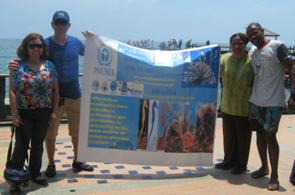 The project coordinated by the Foundation ICRI Colombia for Coral Reefs succeeded to increase citizen participation to improve coral reef management effectiveness in the areas of Capurganá, Sapzurro and La Miel further to the implementation of an environmental education campaign. Three hundred participantsattended 10 meetings. Most of them were representatives of the following groups of stakeholders : Black Council, fishermen, dive operators, boaters, owners of hotels and restaurants and the public. Their relationship with the local authorities needed to be redirected towards more proactive communication, since currently in Capurganá there are no officers from CODECHOCO, the regional environmental authority delegated by the Ministry of Environment and Sustainable Development (MEDS).
ICRI Colombia is serving as a bridge for communication between the community and the national and regional authorities, thanks to the trust built amongst the stakeholders, as well as between the Black Council and tourism businesses in order to develop the local market for lionfish fishing and trade. The Black Council representative, since our visit and guidance in 2010, has taken care of the coral reefs, and has requested that ICRI Colombia lead the development of a framework for their protection. Therefore, he has begun to interact more cordially with the national authorities on Environment and Fisheries referred to in the Law 70 (Previous Consultation) before planning projects for the area. The Black Council considers that our Foundation has shown respect to the community and has listened carefully to their concerns.
The Fishermen and Owners of restaurants were invited to taste lionfish meat after the presentations on the ecological, social and economic values of coral reefs. The leaders of the community concluded that it was good for the community to catch lionish, sell it or eat it. Other problems were identified as relevant such as the industrial fisheries that impact negatively the artisanal fisheries and the reefs. Also the garbage disposal and the sewage water disposal were a target to be tackled by the national and regional authorities and the locals. Half the students of the local school reported the consumption of lion fish as a daily option in their houses. The children welcomed ICRI Colombia with enthusiasm further to the first visit in 2010 when they tasted for the first time lionfish expressing their acceptance for the delicious flavor. ICRI Colombia provided educative material to all the kids as well as awards to the winners of a drawing contest within the framework of the International Contest of UNEP. Themes were to picture themselves in relationship with the coral reefs and the sources of freshwater as foundation of life. The fishermen also received educative materials, gloves and scissors for lionfish fishing as well as awards for starting to catch, eat and sell lionish. This successful campaign was extended to San Andres Island where the outputs were shared with the participants in a Workshop on lionish, and the fishermen and diving operators as well as in some restaurants that shown interest in selling lion fish in their menus.
Some pictures were published in a poster at the Session on Socio-Economics of artisanal fisheries during the 65th annual meeting of the GCFI, convened in Santa Marta from 5 to 9 November 2012. The work was exhibited as an example of bottom-up coral reef co-management led by the civil society and the community.
More photos and videos are included in the webpages of the Foundation ICRI Colombia http://icri-colombia.blogspot.com/ and http://icri-colombia.es.tl/
Exchange Visit to Seaflower Biosphere Reserve by Grenada Marine Protected Areas Staff
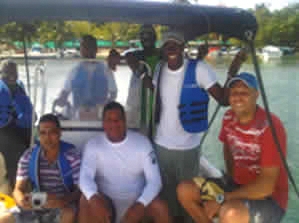 As part of the UNEP-CEP Caribbean Challenge Project Exchange program, staff from Grenada Marine Protected Areas visited San Andres, Colombia, in order to exchange experiences and learn from the well-established Seaflower Biosphere Reserve. There they also attended a large gathering of regional environmental managers, park rangers, fisheries personnel and marine biologists that focused on the sustainable management of the shared marine resources of the Caribbean region.
"There could not have been better location for this visit", remarked the National Marine Protected Areas Coordinator, Roland Baldeo. San Andres Island is part of the Archipelago that is home to the Seaflower Biosphere Reserve, declared by UNESCO in 2000. CORALINA is the regional government authority in Colombia that is responsible for encouraging sustainable development and implementing environmental policies for the Archipelago. Head Warden from the Moliniere/Beausejour Marine Protected Area, Coddinton Jeffrey, described this visit; "We spent some time getting to know the marine protected area, its different zones and the projects going on within the reserve, like the coral nursery and actions to combat beach erosion. We were joined by staff from CORALINA which gave us an excellent opportunity to meet and share about our experiences working on similar conservation objectives in different parts of the Caribbean region."
As part of this visit, the group participated alongside their counterparts from multiple countries of Central America and the insular Caribbean in a workshop focused on collaborative approaches to regional conservation, fisheries management and implementation strategies. Thisinter-disciplinary, international effort is part of the GEF/UNDP/UNESCO – ISOCARIBE Project on Sustainable Management of the Shared Living Marine Resources of the Caribbean Large Marine Ecosystem (CLME).
The workshop saw participants from Grenada, the Dominican Republic, Jamaica, and host the country, Colombia who come together to exchange information, extract lessons that can be applied creatively to each country and area, and also to promote collaboration between countries and their marine protected areas. This was accomplished through individual presentations followed by question and answer sessions as well as round table discussions. Throughout the entire workshop there were English/Spanish interpreters making the necessary translations. "Despite our cultural differences there was a great amount of networking among participants," commented Bryan Prince, warden from the Sandy Island Oyster Bed Marine Protected Area, in Carriacou Grenada.
"There is a need for a regional approach in the management and conservation of our resources," echoed Elizabeth Taylor, Director of CORALINA. This was further emphasized by many of the presentations in the workshop on topics of governance, enforcement and surveillance across borders and how to address the management of trans-boundary marine resources. The latter topic was of particular interest to the visitors given the trans-boundary nature of the Grenada Bank, in which marine protected areas of Grenada and St. Vincent and the Grenadines collaborate to promote the conservation and sustainable use of shared marine resources. On a visit to Johnny Cay, the group witnessed the sustainable development of tourism, fisheries and agriculture in balance with the natural resources. A local fishermen shared his experienced during a visit in Japan. He emphasize the community-based management models where fishermen have been granted exclusive fishing rights in their areas. CORALINA's effort in maintaining this balance were further demonstrated through their assistance to communities with agro-tourism, community enhancement and other tourism initiatives which are very relevant to other MPAs in the region.
The experiences and success stories of Seaflower Biosphere Reserve were outlined in presentations by Fanny Howard, General Coordinator of MPA Projects and other CORALINA staff. "Many of our successes can be attributed to our participatory approach in the entire process," she indicated. For Grenada this underlines the importance of our MPA awareness raising and community consultation activities among all stakeholder groups. The visitors agreed there are lessons learnt which can be used in Grenada's MPAs for a more effective management.
The visit was made possible through collaboration with the Caribbean Environment Programme of the United Nations Environment Programme (UNEP-CEP) and the Caribbean Marine Protected Areas Management Network and Forum (CaMPAM). It was supported by the UNEP-CEP Caribbean Challenge project funded by the Italian Ministry of Foreign Affairs, to assist the establishment of a fully ecologically-representative, climate change resilient, and functional network of marine protected areas in the Caribbean.
For more information please contact the Fisheries Division at Tel # (473) 440 3814, email .
Exchange Between the Dominican Republic and Cuba
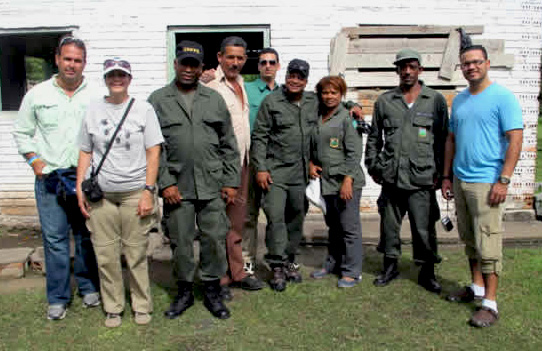 An exchange trip between Dominican Republic and Cuban MPA managers and related staff took place in Cuba from June 3rd to the 10th 2012. This exchange was possible by a project coordinated by UNEP-CEP and funded by the Directorate General for Development Cooperation of the Italian Ministry of Foreign Affairs, that aims at developing activities in support to the Caribbean Challenge initiative in the countries committed with this initiative. The DR Ministry of Environment and Natural Resources and Reef Check DR implemented this trip, with the immense logistical support of the Cuban counterpart Protected Area National Council (CNAP).
DR and Cuba MPA staff spent a full week visiting and exchanging experiences and knowledge at the Protected Area National Council (CNAP) headquarters, the Flora and Fauna Enterprise, the Guanahacabibes National Park and its different conservation and management zones as well as one of the most popular dive sites in the Caribbean, Maria La Gorda, where some of them experienced first hand healthy coral reef and how Cuba is benefiting from tourism initiatives based on these healthy environments. The group then traveled almost a full day to visit Cienega de Zapata, an immense RAMSAR wetland next to Cochinos Bay.These areas are home to still isolated and untouched mangroves where modern tourism initiatives like fly fishing are starting to rise.
But clearly the most interesting moments came from the personal interactions (many hours in a crowded vehicle) that resulted from combining these two Caribbean cultures, both of which share many similarities, but also are encompassed in very different socio-political scenarios. Many heated discussions and laughs made it hard to listen Cuban salsa playing in the car stereo, and brought this group of people closer together for an enhanced future network of neighboring MPAs in the Caribbean sea.
2011
Capacity Building between the MPAs of Northern Islands of the Lesser Antilles : Exchange meeting for MPA managers and staff of Saint-Martin/Sint-Maarten, Saint-Barthélémy, Anguilla, Saba, Statia, Saint-Kitts & Nevis
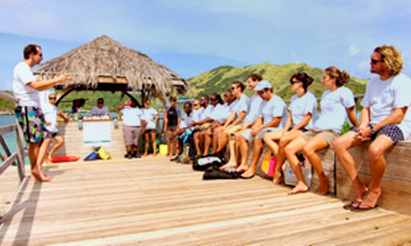 The most important outcome of this meeting is the creation of a unique MPA network between northern Windward Islands encompassing English, Dutch and French territories, dealing with common issues and the proposed establishment of a joint task force for scientific monitoring. By sharing their environmental and economical issues, and learning about different management styles, MPAs manager and staff benefited from each other's experiences. This meeting gave us some tools to improve our management capacity, and these elements need to be studied in detail. To do so, a lot of topics were suggested for our next meeting, such as standardization of some scientific protocols and mooring systems, and the need of a common strategy and focal point for reporting, processing and analysis of lionfish data. Additional technical workshops and field trips need to be organized to examine the funding mechanism of each participating organization in charge of managing the respective MPA, before aspects for decision-making can be determined.
Before the next workshop, which could be more technical than the first one, and in order to further collaboration, managers will keep in contact through a to be established special email forum for updates and information dissemination.
Romain Renoux or Pauline Malterre; Email: or .
Exchange Between Fishers from Southern Belize and Punta Allen, Mexico
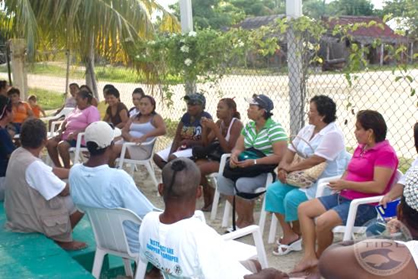 "We learnt so much from the fishers there in Mexico" reported Mr. Martin Reyes. "The way they manage their fishing grounds is good because it works and we can do the same in Belize".
Mr. Martin Reyes was among the 11 participants from Southern Belize who visited Punta Allen and Banco Chinchorro in Mexico. The objective of the five-day visit coordinated by the Toledo Institute for Development and Environment, TIDE was to expose participants to sustainable fishing practices used in both communities, effective management of reserve and economic alternatives. With the recent implementation of Managed Access in the Port Honduras Marine Reserve and Glovers Reef Marine Reserve it is essential to expose fishers to management of sustainable fishing practices and supplemental livelihoods. Fishers from Punta Gorda, Punta Negra and Dangriga had an opportunity to go lobster fishing with Mexican fishers and practise lobster fishing methods. They interacted directly with fishers and reserve managers to learn of the process that led them to the success they enjoy today. Leaders of the Cooperatives in Punta Allen emphasized the need for fishers to respect each other, respect decisions taken by elected leaders of the Cooperatives and the need to follow regulations set by Cooperatives.
Members of the group returned home with much admiration of sustainable lobster fishing methods observed that can be adapted to their respective fishing communities and livelihood practices in Belize. They were also impressed with the exceptional work of fishing cooperatives in the locations visited and efforts of the Mexican fishers that have led to improved livelihood of their fishing families in Banco Chinchorro and Punta Allen. What was additionally observed was the very good working relationship between the local Mexican fishers and tour guides which also contributes to securing their livelihood throughout the year. TIDE expressed gratitude to the Gulf and Caribbean Fisheries Institute, GCFI for funding the visit to Mexico and the participants from Belize for their interest and efforts as well as to the Belize Fisheries Department for their ongoing support.
As a follow up to this visit, TIDE and some of its partners such as Environmental Defense Fund, Wildlife Conservation Society and the Belize Fisheries Department organized a forum for Managed Access fishers in the Port Honduras Marine Reserve. The Forum, which is being funded by the Gulf and Caribbean Fisheries Institute, GFCI and the USAID Regional Program for the Management of Aquatic Resources and Economic Alternatives, MAREA aims to accomplish the following objectives;
- To discuss the implementation of Managed Access in the Port Honduras Marine Reserve, and provide preliminary update on catch data for 2011 to improve implementation in 2012.
- To familiarize fishers with new fishing regulations.
- To share experiences from recent fishers exchange to Mexico.
TIDE and its partners hope to hold at least 2 of these forums per year to ensure fishers are fully aware of the importance of collecting and reporting catch data for the benefit of the Managed Access design.
Photo: Belizean delegates meeting with the cooperatives and women's group in Punta Allen, Mexico.
CUBA – COLOMBIA Exchange on MPA Capacity
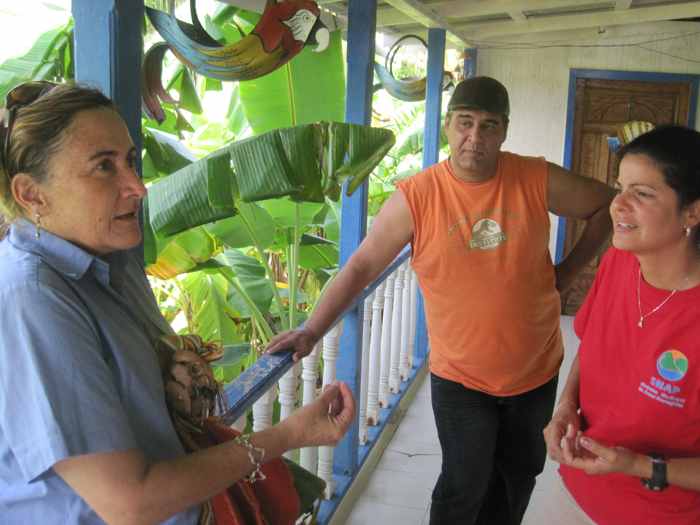 This project was funded directly with the RAC. A Cuban delegation (5 people) visited the Seaflower MPA in Colombia. While in Colombia they met people from CORALINA (San Andes and Providence islands), Colombia National Park, specifically McBean Lagoon, and several stake holders including fishermen and tourism operators. Specific outputs can be summarized as follows:
- In collaboration with Old Providence McBean Lagoon National Park there were technical analysis and ideas exchange about: MPA management plan, sustainable alternatives for artisanal fishers, sponge aquaculture, tourism planning, carrying capacity inside parks, community rights to extraction.
- In visit to artisanal fishermen in Old Providence there were meetings with president of two associations about fishing practices and gears.
- In work with CORALINA in Old Providence there were technical meetings with personnel and community promoters (also fishermen) about ideas for small scale agriculture, recovery of queen conch, program o\f shoot a camera and not a spear gun.
- Results from exchange in San Andres Island, there were extensive work with CORALINA personnel about different institutional projects and management activities. There were presentations about three GEF funded projects on MPA among the bi-national group, which included: MPA management effectiveness, fishery management, coral restoration, buoys installation techniques, etc.
- Dedicated talks to specific stakeholders complemented the work among them were: artisanal fisher associations, and recreational divers.
- During the five days visit of the five Cuban delegates to the Seaflower MPA there were two field trips, one around San Andres and another around Providence islands.
Lessons learnt were immediately applied in three specific workshops with different type of users in Cuba. They also produced a 20 min video with the collection of photographs taken during the Colombia visit. A compromise act to continue working together was also signed between CORALINA and the Centro Nacional de Areas Protegidas.
Capacity building in conservation and management of sea turtles in Colombia, through an exchange program between conservation initiatives at Tortuguero,Costa Rica and Necoclí, Colombia
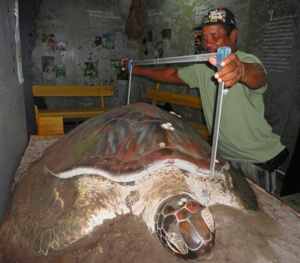 Se realizó un intercambio de experiencias entre personal del proyecto "Conservación de tortugas marinas en Necoclí, Antioquia, Caribe colombiano" y un proyecto de gran trayectoria y reconocimiento internacional desarrollado en el Parque Nacional Tortuguero, Costa Rica por Sea Turtle Conservancy (Antes Caribbean Conservation Corporation) "Programa de Tortuga Verde 2011", con el ánimo de fortalecer el proceso local de Colombia que aporte al cumplimiento de las metas nacionales de conservación de tortugas marinas.
Tres monitores locales del proyecto participaron como Asistentes de Investigación del Programa de Tortuga Verde de Tortuguero, lo cual permitió fortalecer nuestro equipo del proyecto fortaleciendo sus conocimientos y destrezas en el monitoreo de tortugas marinas que aportarán a la consolidación del proyecto en Necoclí. Los monitores locales beneficiados con la experiencia en Costa Rica han realizado capacitaciones a la comunidad (El Lechugal) y comunidades cercanas como Mulatos (Necoclí, Antioquia). Adicionalmente, un monitor local participó en el "II Simposio de conservación de tortugas marinas en el Caribe colombiano" desarrollado en la Guajira colombiana, como una oportunidad para dar a conocer el proyecto en el ámbito nacional. El proyecto "Conservación de tortugas marinas en Necoclí, Antioquia, Caribe colombiano" es una iniciativa comunitaria apoyada por la autoridad ambiental CORPOURABA y la Fundación Conservación Ambiente Colombia, durante este proceso de fortalecimiento fue fundamental el apoyo de Sea Turtle Conservancy y Gulf and Caribbean Fisheries Institute, UNEP-CAR –RCU a quienes extendemos nuestro agradecimiento.
Se realizó un intercambio de experiencias entre personal del proyecto "Conservación de tortugas marinas en Necoclí, Antioquia, Caribe colombiano" y un proyecto de gran trayectoria y reconocimiento internacional desarrollado en el Parque Nacional Tortuguero, Costa Rica por Sea Turtle Conservancy (Antes Caribbean Conservation Corporation) "Programa de Tortuga Verde 2011", con el ánimo de fortalecer el proceso local de Colombia que aporte al cumplimiento de las metas nacionales de conservación de tortugas marinas.
Tres monitores locales del proyecto participaron como Asistentes de Investigación del Programa de Tortuga Verde de Tortuguero, lo cual permitió fortalecer nuestro equipo del proyecto fortaleciendo sus conocimientos y destrezas en el monitoreo de tortugas marinas que aportarán a la consolidación del proyecto en Necoclí. Los monitores locales beneficiados con la experiencia en Costa Rica han realizado capacitaciones a la comunidad (El Lechugal) y comunidades cercanas como Mulatos (Necoclí, Antioquia). Adicionalmente, un monitor local participó en el "II Simposio de conservación de tortugas marinas en el Caribe colombiano" desarrollado en la Guajira colombiana, como una oportunidad para dar a conocer el proyecto en el ámbito nacional. El proyecto "Conservación de tortugas marinas en Necoclí, Antioquia, Caribe colombiano" es una iniciativa comunitaria apoyada por la autoridad ambiental CORPOURABA y la Fundación Conservación Ambiente Colombia, durante este proceso de fortalecimiento fue fundamental el apoyo de Sea Turtle Conservancy y Gulf and Caribbean Fisheries Institute, UNEP-CAR –RCU a quienes extendemos nuestro agradecimiento.
For more details on the Belize Turtle Watch Program please email at ECOMAR (phone: 671-3483) or visit www.ecomarbelize.org/turtle_watch.
The Belize Turtle Watch Program
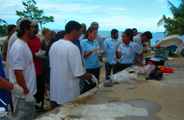 ECOMAR partnered with the Belize Fisheries Department GCFI, WWF, and PACT to promote the Belize Turtle Watch Project which endeavors to determine if climate change will have an impact on sea turtles in Belize. In order to determine what impacts sea turtles, the 2011 Belize Sea Turtle Census was created so all persons that reside or work on the coast of Belize can report their observations.
Outreach programs include coordinating the 2011 Belize Sea Turtle Workshop which was held from June 6-9, 2011 where 27 participants from Belize and Mexico represented 12 organizations. The workshop included a two day theory session in Belize City and a two day field exercise at Turtle Shores, Belize's nesting beach that possesses the greatest number of nesting hawksbills. Participants were immersed in sea turtle biology and conservation, conducted necropsies and learned how to locate and relocate turtle nests. It was a great opportunity for biologists from throughout Belize to network with their colleagues and a reunion is being planned for the end of the nesting season.
Part of the census included reaching out to stakeholders that explore the reef, like marine guides and tourists, and to coastal property owners located near sandy beaches where turtles may nest. A group of recent graduates from St. John's College in Belize City are volunteering with ECOMAR and are spearheading the Adopt A Beach Program as we try to get organizations, resorts, and individuals to adopt a portion of the approximately 100 miles of sandy beaches in Belize so that they can monitor them for nesting turtles and their hatchlings 60 days later.
Participants' of the 2011 Sea Turtle Training Workshop also conducted in-water assessments of sea turtles that forage within their MPAs and local fishermen were recruited and trained to assist researchers, thereby providing an alternative livelihood for them in marine research. The In-Water snorkeling surveys were conducted in areas of the MPAs of other areas that have been identified as supporting sea turtles. Each turtle observed was recorded and captured turtles were brought to a vessel where they were measured, tagged and released.
Questionnaires were used to measure anecdotal information on sea turtles and climate change. Participants used two methods to characterize the beach at Turtle Shores and now have the knowledge and tools to measure the beaches in their protected areas. Characterizing beaches twice a year and after storms will assist in measuring impacts from climate change on Belize's shorelines and impacts on nesting sea turtles.
In the latter part of 2011 we will gather all information on sea turtle activity and beach profiles in Belize and prepare an update to the Belize Sea Turtle Recovery Action Plan (STRAP) that was prepared almost 20 years ago in 1992. The addendum to the STRAP will include information on the current status of sea turtles in Belize and will identify threats, ways to mitigate threats, and will establish or renew objectives of the Belize Sea Turtle Conservation Network members for the next 5 to 10 years.
ECOMAR partnered with the Belize Fisheries Department GCFI, WWF, and PACT to promote the Belize Turtle Watch Project which endeavors to determine if climate change will have an impact on sea turtles in Belize. In order to determine what impacts sea turtles, the 2011 Belize Sea Turtle Census was created so all persons that reside or work on the coast of Belize can report their observations.
Outreach programs include coordinating the 2011 Belize Sea Turtle Workshop which was held from June 6-9, 2011 where 27 participants from Belize and Mexico represented 12 organizations. The workshop included a two day theory session in Belize City and a two day field exercise at Turtle Shores, Belize's nesting beach that possesses the greatest number of nesting hawksbills. Participants were immersed in sea turtle biology and conservation, conducted necropsies and learned how to locate and relocate turtle nests. It was a great opportunity for biologists from throughout Belize to network with their colleagues and a reunion is being planned for the end of the nesting season.
Part of the census included reaching out to stakeholders that explore the reef, like marine guides and tourists, and to coastal property owners located near sandy beaches where turtles may nest. A group of recent graduates from St. John's College in Belize City are volunteering with ECOMAR and are spearheading the Adopt A Beach Program as we try to get organizations, resorts, and individuals to adopt a portion of the approximately 100 miles of sandy beaches in Belize so that they can monitor them for nesting turtles and their hatchlings 60 days later.
Participants' of the 2011 Sea Turtle Training Workshop also conducted in-water assessments of sea turtles that forage within their MPAs and local fishermen were recruited and trained to assist researchers, thereby providing an alternative livelihood for them in marine research. The In-Water snorkeling surveys were conducted in areas of the MPAs of other areas that have been identified as supporting sea turtles. Each turtle observed was recorded and captured turtles were brought to a vessel where they were measured, tagged and released.
Questionnaires were used to measure anecdotal information on sea turtles and climate change. Participants used two methods to characterize the beach at Turtle Shores and now have the knowledge and tools to measure the beaches in their protected areas. Characterizing beaches twice a year and after storms will assist in measuring impacts from climate change on Belize's shorelines and impacts on nesting sea turtles.
In the latter part of 2011 we will gather all information on sea turtle activity and beach profiles in Belize and prepare an update to the Belize Sea Turtle Recovery Action Plan (STRAP) that was prepared almost 20 years ago in 1992. The addendum to the STRAP will include information on the current status of sea turtles in Belize and will identify threats, ways to mitigate threats, and will establish or renew objectives of the Belize Sea Turtle Conservation Network members for the next 5 to 10 years.
For more details on the Belize Turtle Watch Program please email at ECOMAR (phone: 671-3483) or visit www.ecomarbelize.org/turtle_watch.
Building capacity for rights-based management in Belize through an exchange between Belizean fishermen and managers to Banco Chinchorro and Punta Allen, Mexico
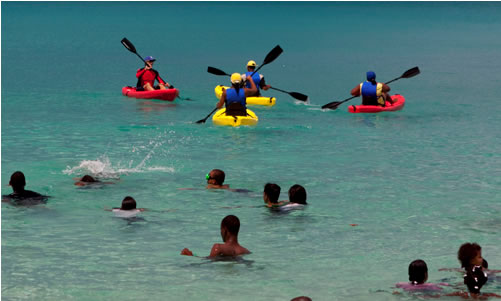 As many other countries, the Dominican Republic's main problems with marine conservation can be linked to lack of education and awareness, and most important, a model that can be used to demonstrate to local stakeholders, the effectiveness of marine conservation and its benefits to biodiversity conservation and local communities. Reef Check Dominican Republic (RCDR), has been working in La Caleta MPA for the past 4 years, raising awareness and building capacity among local fishermen, who once lived from fishing in the Parks waters, and now see a bright future based on sustainable fishing and eco tourism. After hosting the latest CAMPAM Trainer of Trainers Workshop on MPA management, trained participants from the DR Ministry of Environment and Reef Check DR, are ready to transfer knowledge, expertise and lessons learned at La Caleta MPA, to other MPA managers and fishermen using this developing small MPA as a model that represents living etproof that marine conservation not only benefits the environment, but also adjacent local communities.
Photo and text courtesy Ruben Torres
2010-2011
Workshop on Sustainable Practices to Support MPA Conservation - La Caleta Marine Conservation Training Centre (Reef Check, Dominican Republic)
As many other countries, the Dominican Republic's main problems with marine conservation can be linked to lack of education and awareness, and most important, a model that can be used to demonstrate to local stakeholders, the effectiveness of marine conservation and its benefits to biodiversity conservation and local communities. Reef Check Dominican Republic (RCDR), has been working in La Caleta MPA for the past 4 years, raising awareness and building capacity among local fishermen, who once lived from fishing in the Parks waters, and now see a bright future based on sustainable fishing and eco tourism. After hosting the latest CAMPAM Trainer of Trainers Workshop on MPA management, trained participants from the DR Ministry of Environment and Reef Check DR, are ready to transfer knowledge, expertise and lessons learned at La Caleta MPA, to other MPA managers and fishermen using this developing small MPA as a model that represents living etproof that marine conservation not only benefits the environment, but also adjacent local communities.
Photo and text courtesy Ruben Torres
Building stronger linkages among MPAs on the Grenada Bank (Sustainable Grenadines, St. Vincent and the Grenadines)
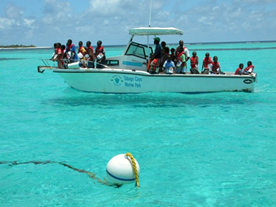 The Grenada Bank, an archipelago of over 30 islands and cays extending from Grenada to the Grenadine islands of St. Vincent, supports the most extensive coral reefs and related habitats in the southeastern Caribbean. While there are currently three legally recognized marine protected areas (MPAs) on the Grenada Bank, MPA management is relatively new to the area, and these MPAs do not regularly communicate or exchange information. Building stronger linkages among MPAs in the Grenadines will strengthen the management capacity of these MPAs through improving their decision-making ability, sharing of lessons learned, reducing MPA/user conflicts and building synergies in their workplans. This approach will set the right precedents for establishing new MPAs on the Grenada Bank, and will ultimately achieve more effective marine conservation and contribute toward fulfilling the Caribbean Challenge commitments made by both countries. This project provides for an expert MPA facilitator to aid in the development of harmonized workplans for each MPA resulting from reviews of site management plans, semi-structured interviews with MPA managers, and input received at a regional networking and planning workshop being run concurrently through a complimentary project. It also provides for an exchange for staff from Sandy Island/Oyster Bed and Molinere/Beausejour MPAs to visit and learn about the operations of the Tobago Cays Marine Park, and the creation of an online tool to enhance communication and opportunities to share lessons learned among MPA managers.
Training for Fishermen from Sandy Island/Oyster Bed MPA, Grenada from Fishermen in Dominica on the Use of Fish Aggregating Devices (Fisheries Division, Grenada)
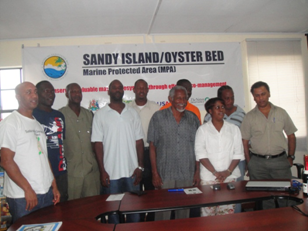
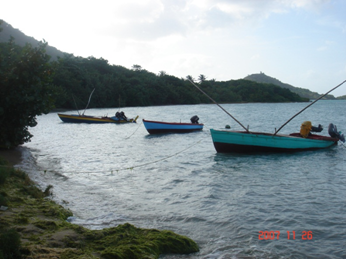
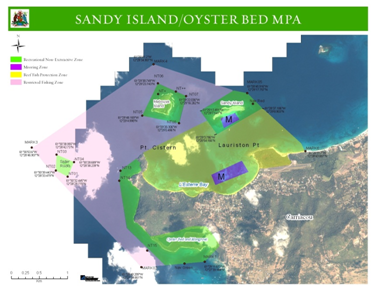 Sandy Island/Oyster Bed Marine Protected Area (SIOBMPA), comprising 787 hectares has been declared as an area requiring special protection of critical marine ecosystems, by the Government of Grenada, in September 2008. The area declared is located on the southwest coast of Carriacou, the second largest of three inhabited islands comprising the state of Grenada, Carriacou, and Petite Martinique. The SIOBMPA was officially launched on July 31st 2010.
The SIOBMPA consists of extensive coral reefs, mangroves and seagrass beds which combine to help maintain a healthy marine and coastal ecosystem that contribute to the social and economic livelihood of the Islands of the Grenadines through fisheries and tourism activities.
Sandy Island/Oyster Bed Marine Protected Area (SIOBMPA), comprising 787 hectares has been declared as an area requiring special protection of critical marine ecosystems, by the Government of Grenada, in September 2008. The area declared is located on the southwest coast of Carriacou, the second largest of three inhabited islands comprising the state of Grenada, Carriacou, and Petite Martinique. The SIOBMPA was officially launched on July 31st 2010.
The SIOBMPA consists of extensive coral reefs, mangroves and seagrass beds which combine to help maintain a healthy marine and coastal ecosystem that contribute to the social and economic livelihood of the Islands of the Grenadines through fisheries and tourism activities.
At the time of declaration, fishing activities were prohibited thereby displacing several fishermen who were engaged in spear and trap fishing in the area. Generally, fishers support the initiative and reasons to protect the area however they expressed concern regarding the loss of livelihood, and as a result requested assistance in obtaining alternative sources of livelihood within the fishing subsector. Therefore, the Fisheries Division convene a consultation with fishermen who agreed that the use of Fish Aggregation Devices (FADs) targeting pelagic species outside of the MPA would be a viable alternative fishing technology that can be easily adapted.
 Within the Organisation of Eastern Caribbean States (OECS) Dominica has been using FAD fishing successfully for several years which was spearheaded by the Fisheries Division. Therefore, the Fisheries Division of Grenada sought and received assurances from the Fisheries Division of Dominica that they are willing to provide assistance to Grenada to enable the transfer of fishing technology using FADs. Consequently, the Fisheries Division of Grenada requested and received financial support from the GCFI small grant program in the amount of US$8,934 to implement this programme. The programme provides for three fishermen and the Fisheries Extension Officer for Carriacou to travel to Dominica for one week commencing 30th January 2011. During this period, the group will be tutored theoretically and practically in the construction, deployment and use of FADs.
 On their return to Carriacou, the group will conduct a workshop for other fishermen who were displaced by the SIOBMPA whereby they would impart the knowledge and skills learnt from their Dominican counterparts to local fishermen. The workshop would provide for construction, deployment and use of one FAD which will be accessible for other fishermen to conduct fishing activities. It is also expected that the SIOBMPA Management Board would spearhead future efforts to construct and deploy additional FADs to expand fishing opportunities.
Conservation and Culture Find Compromise on St. Kitts (St. Kitts Sea Turtle Monitoring Network)
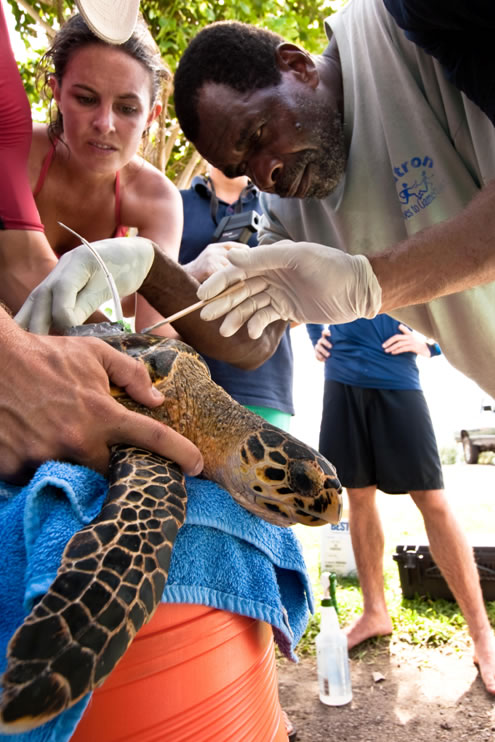 St. Kitts and Nevis has an open harvest in which all species of sea turtles, regardless of their population status, may be captured and rendered from October 1st through February 28th annually. This harvest places significant pressure on St. Kitts hawksbill populations as it is estimated that at least 60-100 hawksbills are taken annually in St. Kitts. This does not include the numbers and species rendered in Nevis. Recognizing the importance of this harvest to the remaining fishermen who participate from both a cultural and financial standpoint, the St. Kitts Sea Turtle Monitoring Network (SKSTMN), the Georgia Sea Turtle Center (GSTC), Ross University School of Veterinary Medicine (RUSVM), and the St. Kitts Fisheries Department have partnered in an initiative to provide non-consumable sources of income for these individuals for participation in capture and release and sea turtle education programs, as opposed to rendering, ensuring that these animals will be here for future generations. Sea turtle education programs will also be implemented. All of this work is being proposed in exchange for not killing and rendering the captured sea turtles, ensuring that these animals will be here for future generations.
2009-2010
Training of Fishermen in Fish Farming - Belize
 The Fisheries Department in collaboration with the National Fishermen Cooperative Society Limited accessed grant funding through the Small Grants Program under the Gulf and Caribbean Fisheries Institute (GCFI) for promoting sustainable fishing practices and alternative livelihoods for fishers under the capacity building framework of UNEP-CEP and its Regional Coordinating Unit in Jamaica (UNEP-CAR/RCU), as well under the Caribbean Marine Protected Areas Managers Network & Forum with support of the Swedish International Development Agency.
The funding request was made on the basis of the need to provide economic diversification opportunities for traditional fishermen in the face of declining catch rates and harvests, and the prospects of increasing poverty. The Cooperative has also expressed an interest to engage in commercial tilapia farming in the medium-term and has developed a project proposal for this undertaking in which some of these fishermen will be directly involved while at the same time reducing fishing pressures. The Fisheries Department has realized the huge fishing pressure being exerted on the Belize Barrier Reef System and as such is embarking in developing alternative livelihoods or income generating opportunities for the fisher folks.
The main component of the project was to implement a two-days training workshop for thirty (30) fishermen in fish farming (focus on tilapia farming) which would be comprised of a one-day theory and one-day field visit to some of the farms already engaged in tilapia production. Part of the lectures would also include a presentation on the recent amendments to the Fisheries Regulations that are geared towards ensuring responsible fishing practices and the sustainability of the fisheries sector.
The first day theory session was focused at providing 30 fishermen with detailed presentations ranging from an overview of the aquaculture sector, husbandry aspects involved in tilapia production and regulatory agencies involved in the development process of aquaculture. One of the presentations also provided an update of the Fisheries Regulations which included the protection of Sport Fish Species, regulations for protection of ‘Grazers’ such as the parrot fish species, Nassau Grouper Management measures and the need for landing all fish fillet with a skin patch. Other information provided was also on the zoning regulations for the Marine Protected Areas.
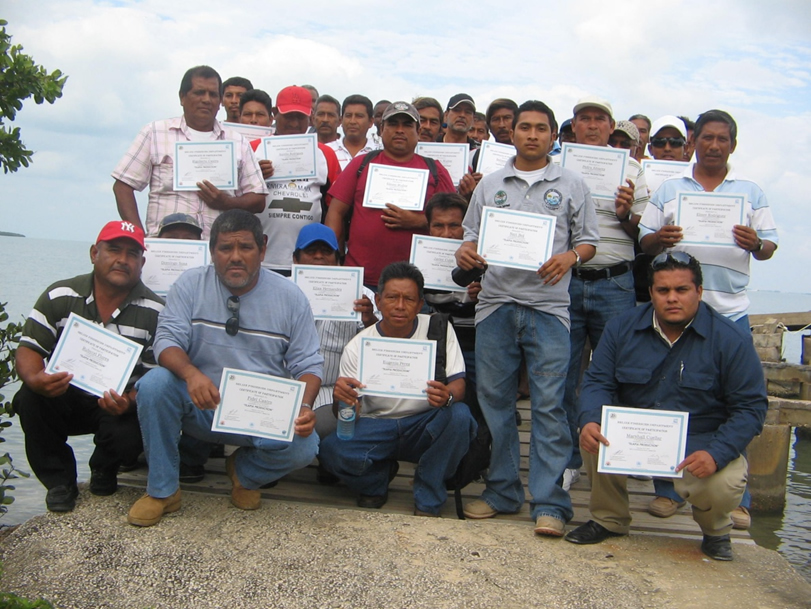
The second day was mostly to complement the theory lectures which were comprised of a field visit to three tilapia farms. These included a field tour of the Fisheries Department Biscayne Tilapia Seedstock Production Facilities whereby fingerlings are produced for supplying small scale fish farmers in Belize; also, a field trip to the Belizean Christian Efforts – Small Scale Tilapia Farm in Flowers Bank Village, Belize District and the Fresh Catch Commercial tilapia production facilities near La Democracia Village in the Cayo District. At the end of the workshop, all participants were provided with a Certificate of Participation. Fishermen were also provided with hard copies of all the power point presentations as well as a copy of a technical manual on tilapia farming.
Training of Soufriere Fishers in Longline Fishing Techniques St. Lucia and Grenada
Information to come
Fly-fishing training workshop for artisanal fishers from Dominican Republic - Venezuela - Dominican Republic
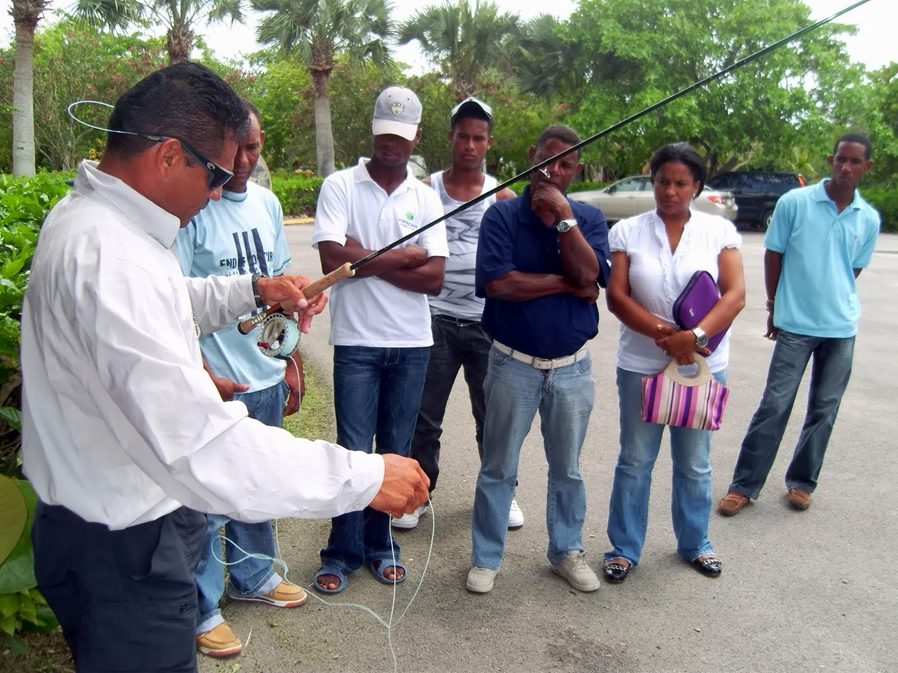 The original project could not be implemented as it was intended. However, the primary objective was successfully achieved.
We encountered difficulties in getting the visas for the Dominican fishermen to travel to Venezuela. Therefore we decided to carry out the exchange in the Dominican Republic and bring a fly-fishing guide from Los Roques Archipelago National Park (Venezuela) to promote the recreational fishery and train the fishermen from Punta Cana and La Caleta. Carlos Marcano, a renowned fishing guide and a former artisanal fishermen from Los Roques, was our first choice. He was honored by the invitation and excited to travel outside Venezuela for the first time.
Working together with with Reef Check Dominican Republic (RC-DR) and Punta Cana Ecological Foundation (PCEF) we planned the workshop to be held in Punta Cana, so we could also reach the fishermen from this area. Ruben Torres, director RC-DR, chose Luis Manuel Nolasco (Morenito), an enthusiastic fisherman from La Caleta, to attend this workshop. The other participants were members of the Fishermen Association of Juanillo in Punta Canta and were invited by PCEF.
The original project could not be implemented as it was intended. However, the primary objective was successfully achieved.
We encountered difficulties in getting the visas for the Dominican fishermen to travel to Venezuela. Therefore we decided to carry out the exchange in the Dominican Republic and bring a fly-fishing guide from Los Roques Archipelago National Park (Venezuela) to promote the recreational fishery and train the fishermen from Punta Cana and La Caleta. Carlos Marcano, a renowned fishing guide and a former artisanal fishermen from Los Roques, was our first choice. He was honored by the invitation and excited to travel outside Venezuela for the first time.
Working together with with Reef Check Dominican Republic (RC-DR) and Punta Cana Ecological Foundation (PCEF) we planned the workshop to be held in Punta Cana, so we could also reach the fishermen from this area. Ruben Torres, director RC-DR, chose Luis Manuel Nolasco (Morenito), an enthusiastic fisherman from La Caleta, to attend this workshop. The other participants were members of the Fishermen Association of Juanillo in Punta Canta and were invited by PCEF.
The modification of the original project turned out to be more beneficial, since we were able to reach a larger number of artisanal fishermen than we first planned. A total of eighth fishermen attended and completed the five day workshop. Valuable training and capacity building were provided during this workshop in which fishermen learned about: 1) the fishing equipment and how to assemble it; 2) different fly-fishing knots; 3) fly-fishing and casting techniques; 4) the different kinds of flies and bates, and which one to use depending on the local conditions; 5) where to look for bonefish and other valuable species for the recreational industry; 6) how to “fight” a fish without harming it; 7) how to safely release a fish; 8) the duties of fishing guide and how to treat and how to treat your customers; 9) how to improve your boat to take clients out to fish and finally, 10) tips on how to promote your recreational fishing business. Additionally to the workshop, we are making a short documentary about this initiative in order to promote recreational fishery as an alternative livelihood for fishermen in other regions of the Caribbean. Fishermen from Punta Cana and La Caleta are aware that their fishing practices are no longer sustainable and they are willing to migrate to other alternatives. However, they were worried that this other alternative will not be as lucrative. During the workshop they learned from the experience of Carlos Marcano, who was also an artisanal fishermen and has become a successful fishing guide. After the workshop they were optimistic about pursuing recreational fishery as alternative livelihood. Finally, we believe that by engaging local organizations like Reef Check and Punta Cana Ecological Foundation, we can guarantee the continuity of this initiative. After the workshop, the fishermen, in alliance with these local organizations, will be in a better position to develop sustainable livelihoods through stakeholder co-management.
2008-2009
Caribbean fishers collaborating on suitable gear and techniques that will contribute to sustainable fisheries – Grenada
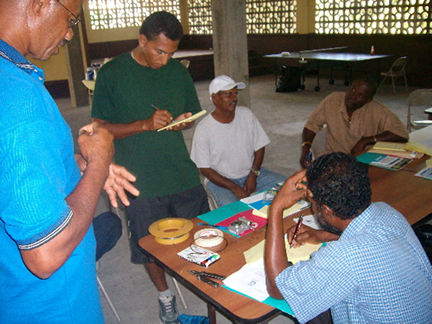 Hosted by the Caribbean Network of Fisherfolk Organisations. The use of some fishing gear and techniques can result in negative impacts on the ecosystem, reducing fishers’ ability to sustain catches and livelihoods. The Caribbean Network of Fisherfolk Organisations (CNFO) has as its mission“to improve the quality of life for fisherfolk and develop sustainable and profitable industry through networking, representation and capacity building” to be “…achieved through the ecosystem based management of fisheries resources”. In order to do this, fishers need to understand ecosystem based management (EBM) and its relationships to their livelihood activities. Exchanges of knowledge and information about the practices adopted by fishers in their respective countries in the fisheries for lobster, reef fish, snappers and pelagics would be valuable in determining what gear and techniques would best contribute towards sustainable harvesting of our resources and sustainable livelihoods. CNFO is a network of fisherfolk leaders well equipped to benefit from such an exchange and share the benefits with others through its organisational membership. Its external partners in this include Gulf and Caribbean Fisheries Instistute (GCFI), Caribbean Regional Fisheries Mechanism (CRFM), University of the West indies – Centre for Resource Management and Environmental Studies (CERMES), Caribbean Natural Resources Instistute (CANARI) and others with similar aims.
The CNFO, with the financial assistance of the United Nations Environment Programme (UNEP), the Gulf and Caribbean Fisheries Institute, and the Swedish International Development Agency (SIDA), executed the project Caribbean fishers collaborating on suitable gear and techniques that will contribute to sustainable fisheries. Fishers from ten different fisherfolk organisations and nine Caribbean countries participated in the exchange held in Gouyave, St. Johns, Grenada, during 1st to 3rd April 2009. In addition to fishers there were resource persons from the University of the West Indies’ Centre for Environment Research and Management Studies (CERMES) and from the Grenada Fisheries Division.
The exchange involved interactive presentations using multimedia projector and flipchart. Also included were practical sessions which allowed participants to produce, examine and discuss some of the gear and techniques presented. Participants were able, using knowledge gained, to produce a list of recommendations on gear and techniques. <read the full report - pdf>
Gladding Memorial Award Regional Fishers Summit — Fishers Working for Sustainable Fisheries – Miami
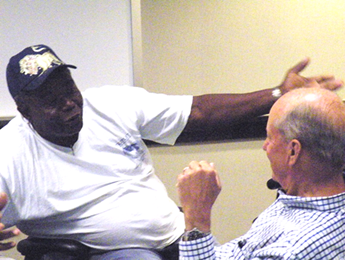 Hosted by the Gulf and Caribbean Fisheries Institute In 2004, the Gulf Caribbean Fisheries Institute (GCFI) with United Nations Environment Programme (UNEP) and other partners developed the Gladding Memorial Award (GMA), named in honor of patriarch fisherman Peter Gladding. The award annually recognizes fishers who demonstrate, through word and action, their commitment to sustainable use and conservation of marine resources in the Caribbean and Gulf region. To date, the following ten fishers have received the award (Annex 1 provides their affiliations).
The GMA is a fundamental part of GCFI’s Fisheries for Fishers Initiative which provides capacity and empowers fishers to participate in the regional marine resource governance process, which also includes Fishers Forums held at recent GCFI events. The ethic of long-term sustainability endorsed by GMA recipients in concert with their accomplishments and commitment to engage organized fishers and other stakeholders in the wise use and conservation of regional marine resources attest to the success of the GMA program.
A momentum has grown around the GMA that is fueled by the fishers themselves and the landscape reality that there are no other initiatives in the region that are attempting to incentivize fisher best practices at this scale. Therefore the GMA Committee within the GCFI Board of Directors has initiated a controlled expansion of the GMA initiative to utilize more of the award’s growing potential. To actualize these opportunities, a GMA Summit, the Gladding Memorial Award Regional Fishers Summit, with the sub-title ‘Fishers Working for Sustainable Fisheries’ is being planned as a principal component of the 62nd Gulf and Caribbean Fisheries Institute (GCFI) which will convene in Cumaná, Venezuela during 2-6 November 2009. Informed approaches to long-term sustainability and conservation of marine resources in the region must include input from fishers, and the Summit, a regional landmark event, is based on the premise that sustainable livelihoods and use of marine resources in the region depend on responsible fishers being ‘at the table’ for discussions on how best to achieve these goals.
The GMA Summit Steering Committee was formed to identify opportunities available to fishers and managers relative to the fisher-driven Summit. The committee held its first meeting in Miami, Florida from May 11-13 to coordinate Caribbean-wide planning for this special event. Participants in the meeting included four GMA recipients: Don DeMaria, Anderson Kinch, Jaime Medina and Toribio Mata, and Mitchell Lay (leader of the Caribbean Network of Fisherfolk Organizations), members of the GMA committee and other invitees.
Properly coordinated planning for the Summit was necessary to provide the unique opportunity to develop a ‘framework for action’ that emphasizes fisher regional networking and cooperation keyed on regional strategies for sustainable marine resource use with fishers and other fisherfolk having a direct role in decision-making and implementation. The meeting included one and one-half days of interactive discussions conducted within a series of technical sessions, followed by a visit to the National Marine Fisheries Service (NOAA Fisheries), Southeast Fisheries Science Center. A multimedia projector was used during the session discussions for purposes of ‘note taking’ and recording pertinent discussion points, thereby enabling all meeting participants to become fully engaged in the discussion process. The meeting was characterized as a ‘collective’ of ideas, opinions and perspectives from those who, according to GMA recipient Capt. Anderson Kinch, ‘fish, study fish or eat fish’.
Following the technical session discussions, participants ranked (Highest, Medium, Lowest) each session topic as to its priority as a potential Summit agenda item based on its level of interest to all regional fishers, some fishers, and other GCFI participants (scientists, managers, etc.). Those rankings revealed a hierarchy of session themes that represented issues to be given summit level consideration. Furthermore, a consensus was reached regarding the general content (ingredients) of the Summit:
- What is the Summit’s main message
- Oral tradition of fishers; they prefer to talk
- Delivery aimed to facilitate retention of messages
- Minimal technology, maybe just photos
- Product required to capture “stories”
- GMA fishers as ambassadors
- Summit needs to “work for” GMA winners
- Use case “stories” NOT typical presentations
- Fisher advocacy as stakeholders and decision-makers
The Steering Committee identified priority areas to frame agenda development for the November Summit and developed details on how best to optimize GMA recipient and other fishing leader inputs. It was agreed that to succeed, the Summit must bring together all GMA recipients, other fishers representing a wide cultural diversity, managers, scientists, educators, students, private sector, and recipients of the UNEP/GCFI Small Grant Funds for Sustainable Fisheries and Alternative Livelihoods, in a facilitated, language interpreted event. Core Summit objectives are:
- developing priorities for the long-term sustainability of the region’s marine resources, and hence sustainable livelihoods, from the fishers’ perspective;
- recommending how organized fishers from across the region can have a voice in following up on those priorities or other fisheries initiatives.